Summary 摘要
Professor Xiaofeng explores how science fiction reflects humanity’s complex relationship with technology and the future. It highlights three key themes: Travel in sci-fi is grounded in scientific imagination, symbolizing freedom and exploration; food is often depicted functionally, sometimes “disgusting,” reflecting societal anxieties about industrialization and loss of naturalness; and robots raise ethical questions about autonomy and what it means to be human. In reconciling technology and humanity, science fiction builds a bridge between science and the humanities, offering imaginative yet critical perspectives on technological progress.
方晓风探讨了科幻如何反映人类与科技和未来的复杂关系。文章强调了三个主题:科幻中的旅行基于科学想象,象征自由与探索;食物通常被描绘为功能性的,有时甚至“令人反感”,这反映了社会对工业化和自然流失的担忧;关于机器人的部分则提出了有关自主和人性的伦理问题。科幻在科技与人文之间搭建桥梁,既有想象力又带批判性地审视科技进步。
Chat 聊天
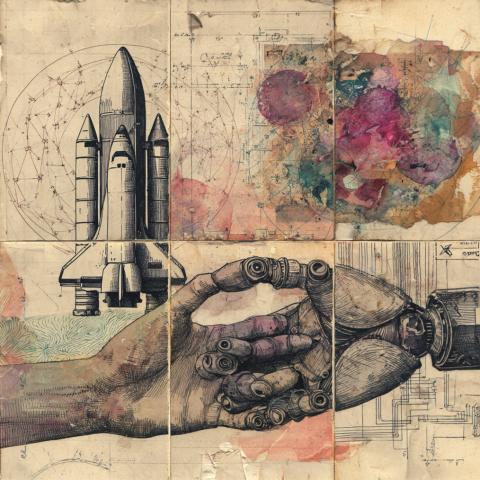
A surreal triptych in a weathered scientific journal. Panel one: A vintage rocket sketched over a star chart. Panel two: A synthetic, geometric nutrient bar under a microscope lens. Panel three: A detailed study of a human hand touching a robot's hand, with biological and circuit diagrams overlapping in the margins. Rendered in watercolor and ink, evoking a sense of academic curiosity and eerie beauty.
DEEPSEEK-V3.1 & MIDJOURNEY V7, AUGUST 2025
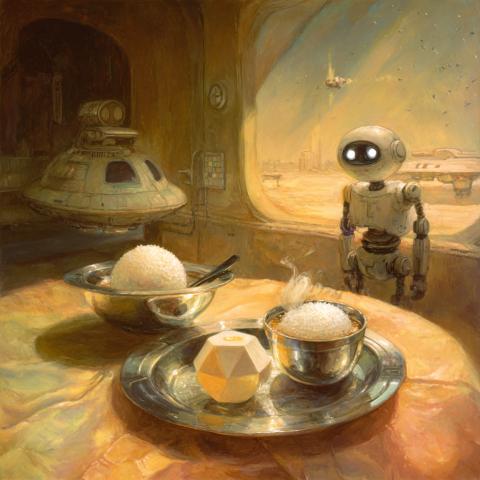
一幅融合科幻与现实主义风格的布面油画。画面中心是一个未来主义的银色餐盘,盛着一颗几何形状的"功能性食物胶囊",旁边却放着一碗冒着热气的传统白米饭。餐盘后方,一个设计流畅的机器人正向观众提出一个未言明的问题,而窗外,一艘复古风格的飞船正驶向星空。整个场景笼罩在暖色调的灯光下,模糊了未来与传统的边界,引发对技术与人性的沉思。
DEEPSEEK-V3.1 与 MIDJOURNEY V7,2025年8月