Abstract 摘要
This study explores the application of artificial intelligence (AI) to interior design education by comparing traditional and AI-assisted renderings of interior spaces by first- and third-year students at Hechi University in Guangxi, China. AI tools significantly improved the renderings made by a first-year student, but not those made by a third-year student. Our results highlight the need to prevent students from relying on the use of AI tools and hindering their development of foundational design skills. It also highlights the need to distinguish between the practicality of AI-generated renderings and the practical requirements of the design process.
本项研究针对中国广西河池学院一年级和三年级的学生,使用传统方法绘制而成的室内空间效果图和使用人工智能辅助生成的室内空间效果图进行了比较,探讨了人工智能(AI)在室内设计教学中的应用。人工智能工具大大改善了一年级学生的效果图,但对三年级学生的效果图却没有达到改善的目的。我们的研究结果显示,防止学生对人工智能工具的依赖,很有必要;否则,会阻碍他们基础设计技能的培养。研究还显示,有必要区分人工智能生成效果图的实用性和设计过程的实用要求。
Chat 聊天
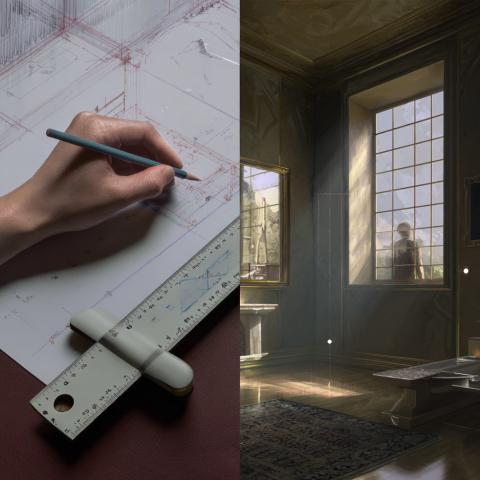
A diptych. Left: a hand meticulously drafts a room with a T-square, showing the foundation of design. Right: an AI generates a flawless, hyper-realistic rendering of the same room. A faint, concerned reflection of the student is visible in the AI's perfect window.
DEEPSEEK-V3.1 & MIDJOURNEY V7, AUGUST 2025
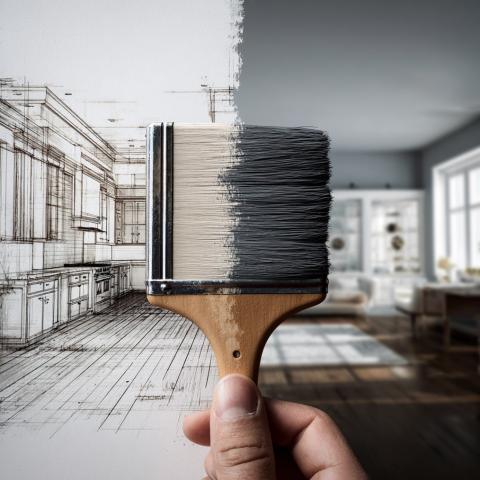
一幅分屏图像。左边是一张在描图纸上精心手绘的建筑草图,可见铅笔痕迹和修改。右边是同一空间的超写实数字效果图,完美但冰冷。一支画笔横跨分界线,其笔刷从石墨灰色渐变为完美的像素。风格为照片级真实的纹理。
DEEPSEEK-V3.1 与 MIDJOURNEY V7,2025年8月