Mat Dalgleish
Birmingham, UK

Dr. Mat Dalgleish is a researcher, educator, and artist-designer working at the intersection of people, audiovisual technology, and accessibility. He is also a congenitally one-handed musician. With a background in sculpture, Mat subsequently studied with interactive media pioneer Rolf Gehlhaar, before a CETL-funded PhD and a period as a visiting researcher at The OU Music Computing Lab. From 2011-2023 Mat led undergraduate and postgraduate provision in audio, creative technology, and the performing arts at the University of Wolverhampton, and he is currently a Senior Lecturer in Game Audio and Technical Design at the University of Staffordshire, a trustee of The OHMI Trust, and an Accessibility Chair of NIME 2026.
Kuo-Ying Lee 李國瑛
Taiwan (R.O.C)
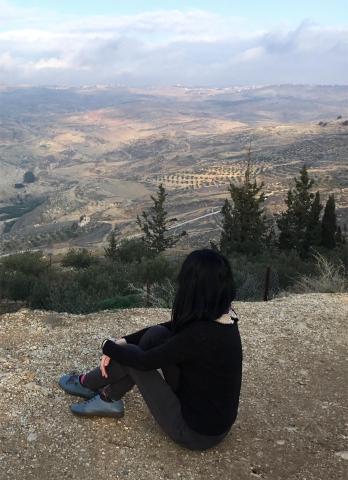
Kuo-Ying Lee is a hyperacusis disorder pianist who obtained her doctoral and master's degrees in music from the University of North Texas and the New England Conservatory. With her personal experience of hyperacusis disorder and an innovative artistic approach in multisensory research studies, she seeks to achieve her lifelong learning goal. She hopes to inspire people to appreciate music inclusively and diversely. Previously, she served as a faculty member at Zhaoqing University, National Tsing Hua University, and National Yang Ming Chiao Tung University. Currently, she is an independent researcher and freelance artist.
李國瑛是一位患有聽覺過敏症的鋼琴家,曾先後於美國北德州大學與新英格蘭音樂學院取得音樂博士與碩士學位。憑藉自身對聽覺過敏症的親身經驗,以及在多感官研究中的創新藝術實踐,她致力於實現終身學習的目標,希望能啟發人們以包容與多元的方式欣賞音樂。她曾任教於肇慶學院、國立清華大學及國立陽明交通大學,目前為獨立研究員與自由藝術工作者。
Zsofi Valyi-Nagy
Los Angeles, CA
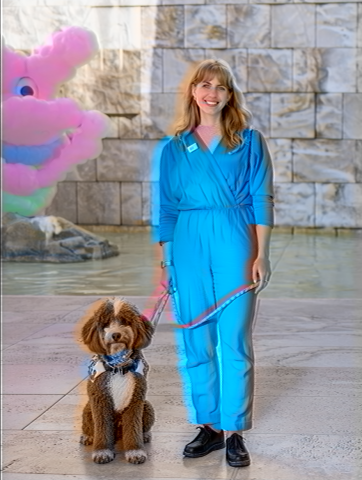
Zsofi Valyi-Nagy is a historian/practitioner of new media art based in Los Angeles. She is currently Visiting Assistant Professor of Art History at Scripps College, where she teaches modern and contemporary art, media archaeology, and crip aesthetics. She earned a BA in visual arts and a PhD in art history from the University of Chicago and her research has been supported by the Getty Research Institute, the National Gallery of Art, the Fulbright and Dedalus Foundations, and the DAAD. She is co-founder of the LA-based collective i<3files and one-half of the sound art project Soft Reset. She has written for Artforum, Art Journal, Art in America, Right Click Save, and several exhibition catalogs. Her Substack, HIGH FUNCTIONING, explores chronic pain and illness through long-form comics and experimental writing.
Abram Stern
Santa Cruz, CA
Enhance-Redact (Cancer Surveillance Study #1)
Abram Stern, MFA. Ph.D., (they/he) is an artist and scholar whose work seeks out ways that institutionally situated media reveals itself. Much of this work draws from collections of government media and metadata related to surveillance and its oversight. They look closely at technical systems and make projects that operate in gaps of intelligibility. Rather than seeing these gaps as problems to be solved through technical solutionism, Stern makes work that functions in a poetic capacity to surface rhymes and dissonances among institutions, infrastructures, formats, and techniques of sense-making.
Their artwork has been exhibited at Slash Art, the Institute of Contemporary Art at Maine College of Art and Design, Real Art Ways, the Beall Center for Arts and Technology, Works|San Jose, and New Langton Arts. Abram served as an education fellow for the Visualizing Abolition initiative at the Institute of Arts and Sciences at UC Santa Cruz, a public humanities fellow for The Humanities Institute, and a research fellow for the CITRIS Data and Democracy Institute. Their work has been published in Media-N: Journal of the New Media Caucus and Information Polity. Abram's projects and collaborations have been supported by funding from the Sunlight Foundation, the Knight Foundation, the National Science Foundation, the Mozilla Foundation, and the University of California Humanities Research Institute. They hold a Bachelor’s degree in Digital Media from the San Francisco Art Institute, a Master’s in Fine Art of Digital Art and New Media and a Ph.D. in Film and Digital Media from the University of California, Santa Cruz.
Tanya Marie Vlach
San Francisco, CA
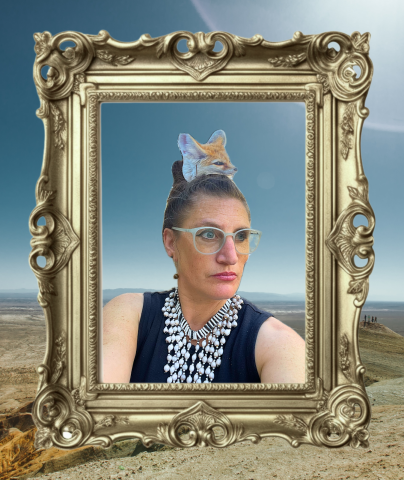
Tanya Vlach is a transdisciplinary artist, writer, and designer based in San Francisco whose work explores disability, transformation, and the porous boundaries between human and machine. Working across performance, photography, collage, and speculative storytelling, she reimagines trauma and recovery as creative portals. Her ongoing project The Uncovery merges lived experience, AI collaboration, and mythic world-building to examine how we see, remember, and evolve. Grounded in access, empathy, and play, her practice invites viewers into a hybrid landscape of imagination and repair.
Lucia Grossberger Morales
Palm Desert, CA
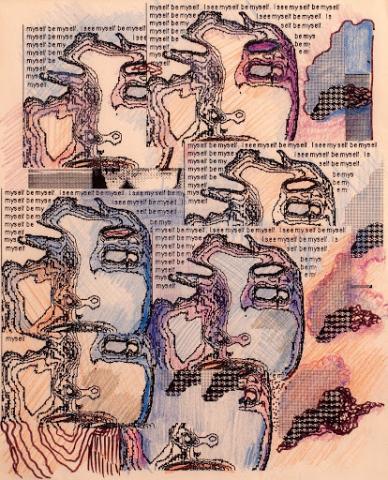
Lucia Grossberger-Morales is a Bolivian-born American artist and technologist who integrates digital innovation with cultural memory, drawing on Andean and broader
Latino/Indigenous traditions to create installations, interactive environments, and virtual experiences that engage both personal history and collective identity.
In 1979, after a pivotal dream, she bought an Apple II computer and explored digital creativity at a time when the field was just emerging. She co-authored The Designer’s Toolkit (1982), published by Apple Computer, Inc. She remains at the forefront of innovation in AI, generative media, and immersive environments, promoting culturally informed and responsible technological practices.
Christian Bayerlein, Yesica Duarte and Puneet Jain
Koblenz, Germany/Zurich, Switzerland/Linz, Austria
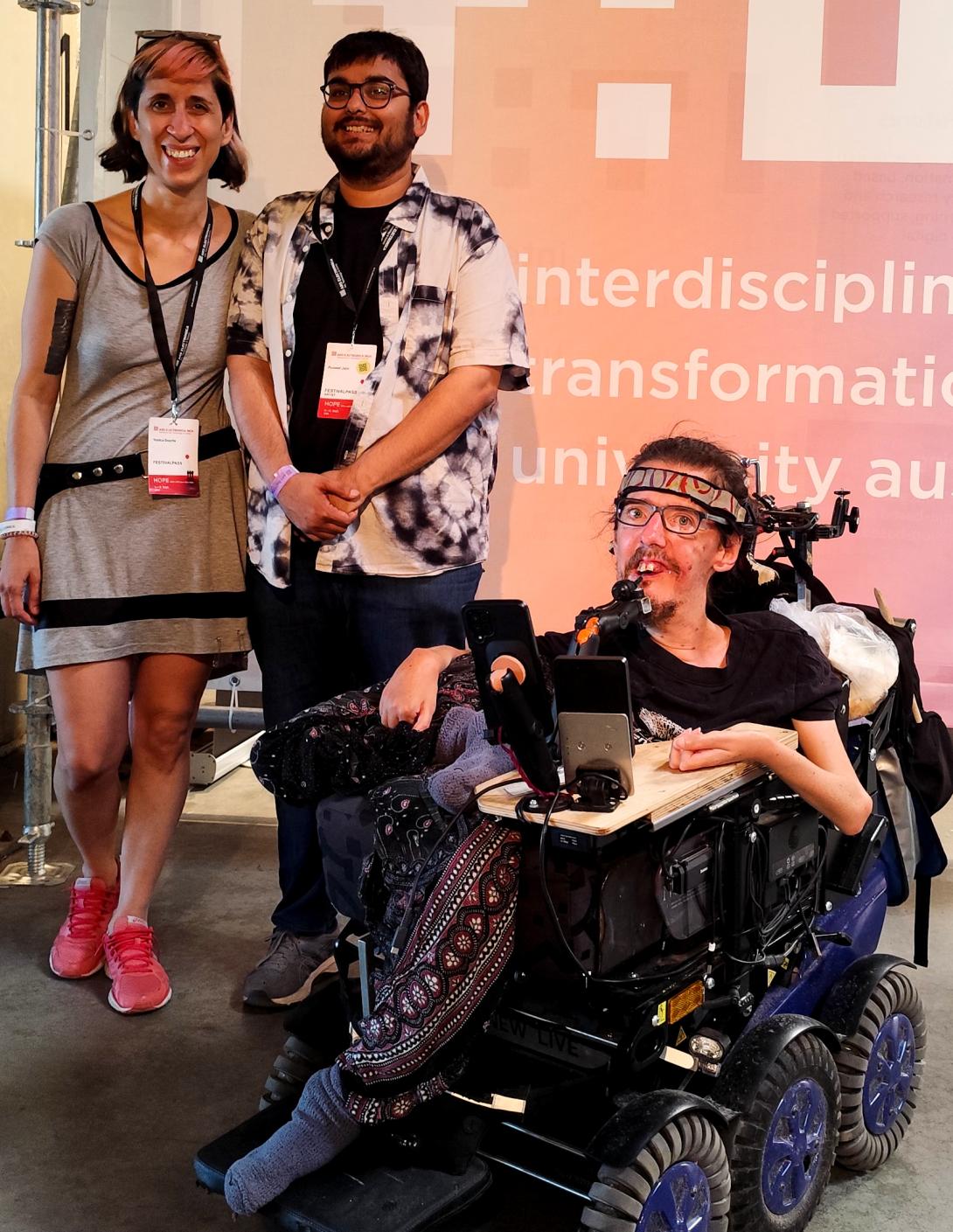
Christian Bayerlein, Yesica Duarte, and Puneet Jain form an inter-abled collective. Coming from diverse, cross-disciplinary backgrounds, their shared practice weaves together art, engineering, technology, research, and activism. They love to hack and modify existing XR and AI technologies, adapting them to their own needs. For them, this becomes a strategy to reimagine power dynamics and confront technological ableism—twisting the ableism of waking life toward a more inclusive technological landscape and emphasizing with disability justice.
As part of this residency, they aim to recentre disability in discussions of AI bias and justice by “cripping” LLMs.