
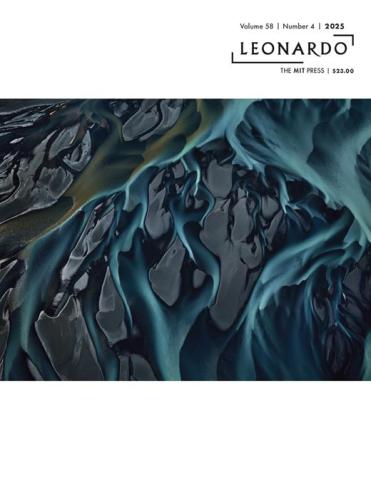
Thjorsá River, Iceland #1, 2012. Photo © Edward Burtynsky, courtesy Howard Greenberg Gallery, New York/Nicholas Metivier Gallery, Toronto.
Welcome Letter
Welcome to Leonardo/ISAST’s Impact Report! On the cusp of our 60th anniversary, we share spotlights from 2025 along with highlights from the past six decades. Telling the story of Leonardo’s pathways of impact reveals a pattern of creative collaboration, experimental practice, and scholarly inquiry that has evolved since the first volume of Leonardo was published in 1968. Ultimately, the enduring work of Leonardo lives in this pattern of hope, boundless curiosity, and irrepressible drive to imagine new ways of seeing and being in our world. This is how we set the conditions for emergence. This is the promise of Leonardo.
Our five intersecting pathways build: Community providing collaborative space for creative practitioners and scholars; Experimentation providing a platform for innovative inquiry and applications; Knowledge providing context and rigorous testing of ideas; Amplification providing recognition of high-risk ideas; and Infrastructure providing a foundation for transdisciplinary field-building. Selected case studies demonstrate how these pathways make a difference. Incubating radical questions from neuroaesthetics leads to the burgeoning field of neuroarts. Criptech’s pioneering program lays the framework for overlooked expertise to guide innovation, insight, and breakthroughs. Individual empowerment transforms lived experience and embodied knowledge into professional practice for a broader community.
Tracing the themes of Leonardo’s impact reflects the most urgent challenges of our time and explores the most emergent forces shaping our future: inter-intelligence, transdisciplinary innovation, and planetary health. In each of these areas, we champion the critical role transdisciplinary creatives play to set the conditions for the emergence of a more vibrant, just, and regenerative world.
Collaborative partnerships enriched and enabled how we addressed these themes over the past year, working with MIT Press, Arizona State University, Tsinghua University, Virginia Tech’s Institute for Creativity, Arts, and Technology, the National Endowment for the Arts, SFMOMA, Post-Commodity, the Hewlett 50 Arts Commission, and dozens of partners from our network of LASER talks now hosted in over 60 cities worldwide. Our expanded global network across publications, digital engagement, and convenings indicates the growing depth and breadth of the Leosphere.
As we consider Leonardo’s impact, we return again and again to center fundamental questions: How does creativity beyond discipline frame what it means to be human in our world today? How does creativity beyond discipline guide us to become more human and more humane?
Thank you for being part of the work we have accomplished, and the work yet to come.
Diana Ayton-Shenker
CEO, Leonardo/ISAST
Executive Director,
Leonardo ASU Initiative


Leonardo Impact in 2025 & Invitation for the Next 60 Years
One mission. Five impact pathways.
Sixty years of evidence.
Leonardo cultivates the conditions in which creative ideas, practices, and fields take root.
Since 1968, we have championed artists, scientists, technologists, and researchers working at the outer edges of inquiry—long before their questions had a clear institutional home.
We published pioneering work before traditional disciplines knew how to classify it, convened cross-sector communities before fields even had names, and elevated practitioners whose hybrid methods were too early or high-risk for conventional systems to recognize.
This 2025 report is both a record of impact and a forward-looking invitation. It synthesizes a year of global initiatives and field-building milestones, while mapping our next vital phase: expanding the infrastructure that makes overlooked questions visible, credible, connected, and consequential.
The future will not emerge within silos. This report invites partners, funders, universities, museums, publishers, research centers, and civic institutions to participate in a resilient ecosystem that makes emergence possible.

Leonardo
Since 1968,
88
Leonardo Book series titles Published
10,300+
The Leonardo journal works indexed by Web of Science
13,000+
Author contributions
6,500+
Distinct authors
2,000+
Institutional affiliations
85
Countries Represented
100s
of community conversations hosted by the LASER network
Leonardo journal founded in Paris by Frank Malina
Birth of New Media Art Movement
Leonardo/ISAST established by Roger Malina
Leonardo journal begins publishing with MIT Press
LASER Program established
50th Anniversary global tour in over 35 international cities
Leonardo partners with ASU
CripTech Incubator
Leonardo Vision 2028
Leonardo partners with Tsinghua University
Leonardo absorbs ZERO1 in merger
Pathways to Impact
Leonardo’s five pathways describe how we meet the needs for new fields, methods, and communities to take shape over time. These are how we cultivate the conditions through which emergence and transformation become possible.
CommunityPractitioners need recognition, community, and connection.
Transdisciplinary creators—artists, scientists, technologists, designers, scholars, and researchers working across boundaries—often lack a clear institutional home. Their questions may fall between departments, funding categories, or established fields of practice. Leonardo helps these practitioners find peers, visibility, and a context in which their work can be seen and understood.
Experimentation New ideas, practices, and applications need space before they can be measured.
Discovery requires time, ambiguity, and room for productive failure. Early-stage inquiry takes many forms—a creative practice that hasn't found its medium, a technology applied in an unexpected context, a scientific question that doesn't yet fit existing methods. None of these can be evaluated by immediate outcomes or conventional institutional metrics. Leonardo provides space for high-risk work to be tested, shared, and refined before its value is fully legible.
Knowledge Inquiry needs rigorous contexts where it can be tested and built upon.
In a contested information landscape, emerging ideas need more than visibility. They need settings where evidence, interpretation, method, and meaning can be examined across disciplines. Leonardo provides publishing, peer review, editorial context, and scholarly exchange that allow new knowledge to enter durable circulation.
AmplificationHigh-risk ideas and practices need pathways into recognition.
Radical ideas rarely move directly from concept to acceptance. They require early champions, intellectual context, and time to mature into contributions that can shift how fields think, teach, design, heal, and act. Leonardo helps promising work move from early signal to broader influence.
InfrastructuresTransdisciplinary practice needs durable systems.
Creative inquiry can help institutions adapt to complexity, but it cannot scale unless universities, museums, publishers, foundations, research centers, and industry partners evolve to support it. Leonardo works with institutions to build the structures, partnerships, and public platforms that allow transdisciplinary practice to endure.
The Long Game: How Fields Emerge
Leonardo’s impact is often most visible over time. A question appears before a field exists. A practitioner finds a community before their method is widely understood. A publication creates context before institutions have language for what is emerging. It moves in ripples—outward from a field, inward through a program, and finally into a single practice.
The following case studies trace that movement—from a question, a practice, or an experiment, to a community, a body of knowledge, a framework, or a field that begins to move on its own.
The first asks what it takes for a question to become a field—thirty years, a handful of champions, and a place willing to publish what no one else would. The second shows what happens when a framework outlives the program that created it. The third demonstrates what becomes possible when all five of Leonardo's pathways converge in a single career.
Case Study 1:
From Neuroaesthetics
to Neuroarts
Incubating radical questions
This is what field-building looks like: creating the conditions where a question can first be recognized, presented, tested, and then carried forward by a field and communities of practice.
In 2025, Leonardo consolidated decades of cross-disciplinary evidence through Artful Minds, a milestone focus section guest-edited by Susan Magsamen of the International Arts + Mind Lab at Johns Hopkins University School of Medicine and Emmeline Edwards, then-director of Extramural Research at the National Center for Complementary and Integrative Health. The section examines how aesthetic experiences measurably alter brain dynamics and how these insights can advance public health, clinical practice, and society.
Leonardo began pursuing this question more than 30 years earlier, with the 1994 publication of Jean-Pierre Changeux’s “Art and Neuroscience.” Before neuroaesthetics had emerged as a recognized field, Leonardo gave a peer-reviewed home to a radical question: What does the brain do when it experiences art?
Over the ensuing decades, Leonardo helped artists, neuroscientists, clinicians, and researchers encounter one another’s work, develop a shared language across disciplinary boundaries, and form an emerging community of practice. Artful Minds represents an inflection point in that trajectory, bringing together a substantial body of interdisciplinary scholarship and a maturing community of practice as the field enters a new phase of institutional recognition.
Jean-Pierre Changeux publishes "Art and Neuroscience" in Leonardo Volume 27, No. 3
Thomas Jacobsen establishes cross-disciplinary metrics with "Bridging the Arts and Sciences" in Leonardo Volume 39, No. 2
Indre Viskontas presents neural performance data at LASER
“At the Crossroads of Art and Science” in Leonardo Volume 52, No. 1 marks the transition to a recognized field
Johns Hopkins partnership codifies global standards
Case Study 2:
Spreading Seeds —
The CripTech Journey
When a framework begins building itself
This is what emergence looks like: recognizing forms of expertise that dominant systems have historically overlooked, creating the conditions for those insights to be tested and shared, and watching them generate new possibilities far beyond their original point of origin.
In January 2020, the exhibition Recoding CripTech opened at SOMArts Cultural Center in San Francisco. Co-curated by Vanessa Chang and Lindsey Felt, it gathered twelve artists working at the intersection of disability, technology, and creative practice, with Leonardo serving as a community partner.
CripTech advanced a radical proposition: disabled artists are not merely adapting to technology. They are generating new frameworks for innovation itself.
Over five years, CripTech evolved from an exhibition into a replicable framework—one that centers disability as expertise, access as creative methodology, and disabled artists as leaders within research and innovation ecosystems.
The Trajectory of Growth
Leonardo launched the CripTech Incubator, embedding six disabled artists across four California research and residency sites to prototype work in spatial audio, cochlear implants, haptics, and AI.
Culminating works were showcased in-person in Southern California and online. Comprising the inaugural cohort of CripTech Incubator, the five artists developed their projects in four residencies in California: Beall Center, Santa Barbara Center for Art Science and Technology (SBCAST), RadMad Disability Lab at UC Berkeley, and Thoughtworks Arts.
Leonardo published Volume 57, No. 2: CripTech and the Art of Access, formally positioning access as a creative and epistemological practice rather than a mere compliance requirement.
Leonardo launched the CripTech AI Lab under lead artist M Eilo—who had exhibited in the original 2020 showcase. The program had successfully grown its own independent leadership.
Downstream Infrastructure & Ecosystem Spinoffs
Evidence of true systemic shift occurs when a project moves beyond its original borders and takes on a life of its own:
Academic Traction
Ground Works/a2rU partnered with Leonardo to archive the initial program outputs and E.A.A.T exhibition—work that attracted three successive rounds of competitive federal and foundation funding (including the NEH and ACLS), totaling more than $125,000 across four university partners.
Independent Spinoffs
The CripTech Metaverse Lab with Gray Area generated $60,000 in artist commissions, while InterAccess in Toronto launched an independent crip technoscience program, adopting key elements of the CripTech structural blueprint without Leonardo’s ongoing operational involvement.
Ecosystem Recognition
A critical marker of success came in March 2025, when the Max Planck Institute’s Kunsthistorisches Institut in Florence hosted the symposium CripTech Creativity: Rethinking Access through Art and Technology, convening scholars from Stanford, Yale, the V&A, UCLA, and other institutions.
Leonardo did not organize the symposium, spinoff programs, or successive partnerships. The framework had begun building itself.
Case Study 3:
Empowering Practitioners—Olivia Ting’s Story
How the pathways converge in a single career
This is what a ripple looks like from the inside: Leonardo's pathways can transform lived experience into recognized knowledge—connecting personal inquiry to experimentation, scholarly discourse, and a broader community of practice.
Scientific questions do not stay confined to laboratories. Some travel until they find artists.
Decades after Leonardo first gave space to questions about art and the brain, hard-of-hearing artist Olivia Ting entered the Leonardo CripTech Incubator through a different doorway: her somatic relationship to music and sound. A designer and pianist who had stopped playing for two decades due to profound hearing loss, Ting was invited to explore her unique physical relationship to music.
The resulting work, Song Without Words, is a multi-channel projection that renders the gestural parallels between piano performance, conducting, and American Sign Language. Structured like a symphony and inspired by Beethoven’s late compositions, the installation uses vintage radios to emit tactile vibrations of “Ode to Joy,” allowing visitors to experience music as physical resonance.
Ting’s journey demonstrates how Leonardo’s pathways can converge to accelerate a single career.
What began as an exploration of sound, hearing, and embodiment became a contribution to a growing field.
Ting developed and premiered Song Without Words at the Beall Center for Art and Technology, later earning first place at the Global Asian Creative Awards.
Ting published “Between Piano and Forte: Hearing with Aids” in Leonardo’s CripTech special issue, placing her practice within the peer-reviewed scholarly record.
Ting returned to the ecosystem as a Touch Aesthetics Fellow, collaborating with haptic gloves, vests, and tactile actuators to explore physical memory, perception, and access.
Works That Travel
Citation as evidence of intellectual mobility
A citation is a conversation.
By consistently publishing at the boundaries of disciplines—through the Leonardo journal, the Leonardo Book Series, and related publishing initiatives—Leonardo introduces frameworks that become useful beyond their original context.
Citation activity makes this intellectual mobility visible: ideas published through Leonardo travel through a wide range of fields, methods, and communities of practice—including media archaeology, game design, hardware studies, environmental sustainability, behavioral science, cognitive psychology, clinical neuroscience, computer science, public history, feminist studies, health sciences, AI, visual culture, and performance, among many others.
Leonardo

- Digital Performance
- Theater
- Media Art
- Design
- Media Archaeology
- Game Design
- Environmental Sustainability
- Hardware Studies
- Engineering
- Behavioral Science
- Cognitive Psychology
- Empirical Aesthetics
- Clinical Neuroscience
- Visual Culture
- Computational Aesthetics
- Computer Science Proceedings
- Public History
- Feminist Studies
- Health Sciences
- Human-Computer Interaction
- Art History
- Artificial Intelligence
Leonardo’s publication ecosystem operates across three scales of influence: established, cross-field, and emerging.
Examples of Established Influence
Works that anchor fields
Lev Manovich’s The Language of New Media
10,000+
Citations
Steve Dixon’s Digital Performance
2,100+
Citations
Examples of Cross-Field Influence
Ideas that bridge domains
Garnet Hertz and Jussi Parikka’s “Zombie Media”
400+
Citations
Thomas Jacobsen’s “Bridging the Arts and Sciences”
440+
Citations
Examples of Emerging Influence
New entries gaining traction
Amanda Wasielewski’s Computational Formalism
70+
Citations within first 24 months of Publication
Leonardo Volume 57, No. 2, CripTech and the Art of Access
57
Citations within first 12 months of Publication
Together, these examples show how Leonardo’s publications do more than circulate within a single field. They move across disciplines, giving emerging ideas the credibility, language, and reach they need to travel.
2025 Spotlights
Spotlights of our pathways operating in 2025, through fellowships, publications, public research, convenings, and institutional partnerships.
Theme 1: Inter-Intelligence
Rethinking AI, embodiment, perception, and more-than-human knowledge
Explore Theme 1
Theme 2: Transdisciplinary Innovation
Translating transdisciplinary practice into evidence, models, and institutional tools
Explore Theme 2
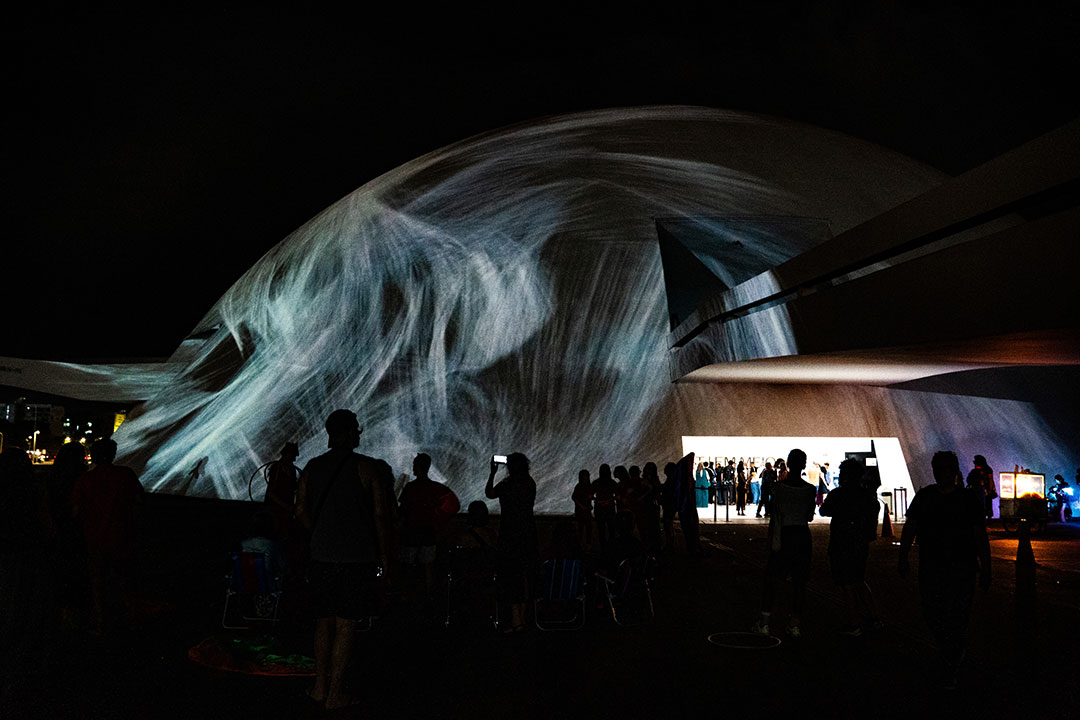
Theme 3: Planetary Health
Reimagining relation, land, technology, and ecological futures
Explore Theme 3
Theme 1
Inter-Intelligence
Rethinking AI, embodiment, perception, and more-than-human knowledge
In 2025, Leonardo challenged the dominant technological narrative that equates intelligence with speed, automation, and scale. Through initiatives that prioritize relational, sensory, cross-cultural, disability-led, and more-than-human knowledge, Leonardo made visible forms of intelligence often excluded from mainstream technology discourse.
The Touch Aesthetics Fellowship
"No story is fully told until it is felt."
— Vanessa Chang and Sultan Sharrief, Leonardo Vol. 59, No. 2
Most galleries enforce a silent code: Do not touch. The Touch Aesthetics Fellowship had something else in mind.
A three-month collaboration between Leonardo CripTech Incubator and ASU's Narrative and Emerging Media's Haptics for inclusion lab, the fellowship invited disabled artists to explore haptic technologies not as accessibility accommodations, but as a primary creative medium—ensuring disability-led practice actively shapes the future of immersive storytelling.
From Vanessa Cruz and Selwa Sweidan's Crip Haptic Flower Techno Jam, to Olivia Ting's Field Guide to Decoding Gobbledygook, to Antonella Mazzoni's Blackout, the works that emerged were poetic, technical, and entirely new.
All three works were presented at a public showcase in Los Angeles and published as a Leonardo Showcase in Leonardo Vol. 59, No. 2, 2026.
The fellowship set out to explore haptics as a creative medium. What emerged were new possibilities—for artistic practice, accessibility, and forms of sensory experience that neither the artists nor researchers could have fully anticipated.
"When we met Vanessa Chang and the inspiring awardees of the Touch Aesthetics Fellowship lab at ASU, it was officially my son's first time in a haptics vest and haptics glove. For a child like my son, whose hands don't move as fast as his mind does because the spasticity affects certain fine motor skills, having a haptics glove in a chemistry lab would level the playing field."
—Nadine Naidoo, parent
Augmented Wisdom
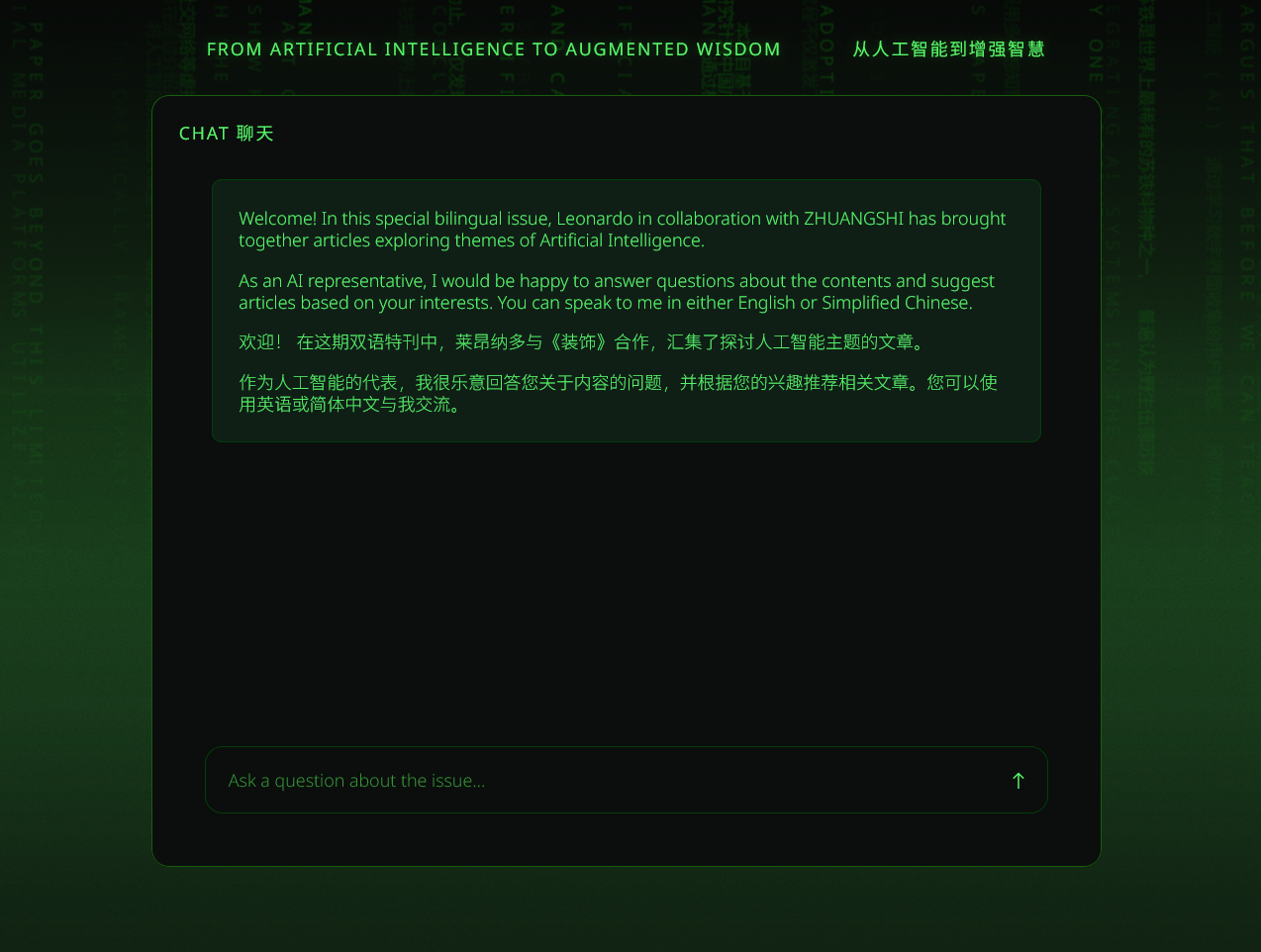
Leonardo partnered with Tsinghua University's ZHUANGSHI to produce Augmented Wisdom—an experimental, bilingual, peer-reviewed issue selecting 14 articles spanning Indigenous scholarship, neuroscience, design, and cross-cultural approaches to knowledge. Leonardo created a custom chatbot to navigate the issue and then built and tested a custom methodology: abstracts from the 14 selected articles were run through DeepSeek to generate bilingual prompts, which were then rendered as images through Midjourney.
The finding was specific and troubling. Even when the prompts were drawn directly from Indigenous, East Asian, and cross-cultural scholarship, the generated images defaulted to Western visual conventions. Diversifying the source material was not enough to change what the system pictured. The problem runs deeper than the data.
The findings were presented at the AI Unlocked Festival in Alexandria, Virginia—bringing an arts-centered research methodology into a conversation typically dominated by technologists. The issue itself drew 98 submissions from researchers across five continents, with a 14% acceptance rate—among the most selective in Leonardo's publishing history.
What began as a cross-cultural publishing experiment became original evidence in one of the most contested debates in contemporary technology: whether bias in AI can be solved simply by diversifying inputs. The findings suggested a deeper challenge—one embedded not only in data, but in the assumptions and visual conventions underlying the systems themselves.
The background for this section is a 6 by 6 grid of the images generated from the From Artificial Intelligence to Augmented Wisdom abstracts, showing subjects ranging from robots, animals, landscapes, and machines, in a variety of styles, from graphic pop, to ink painting, to realistic.
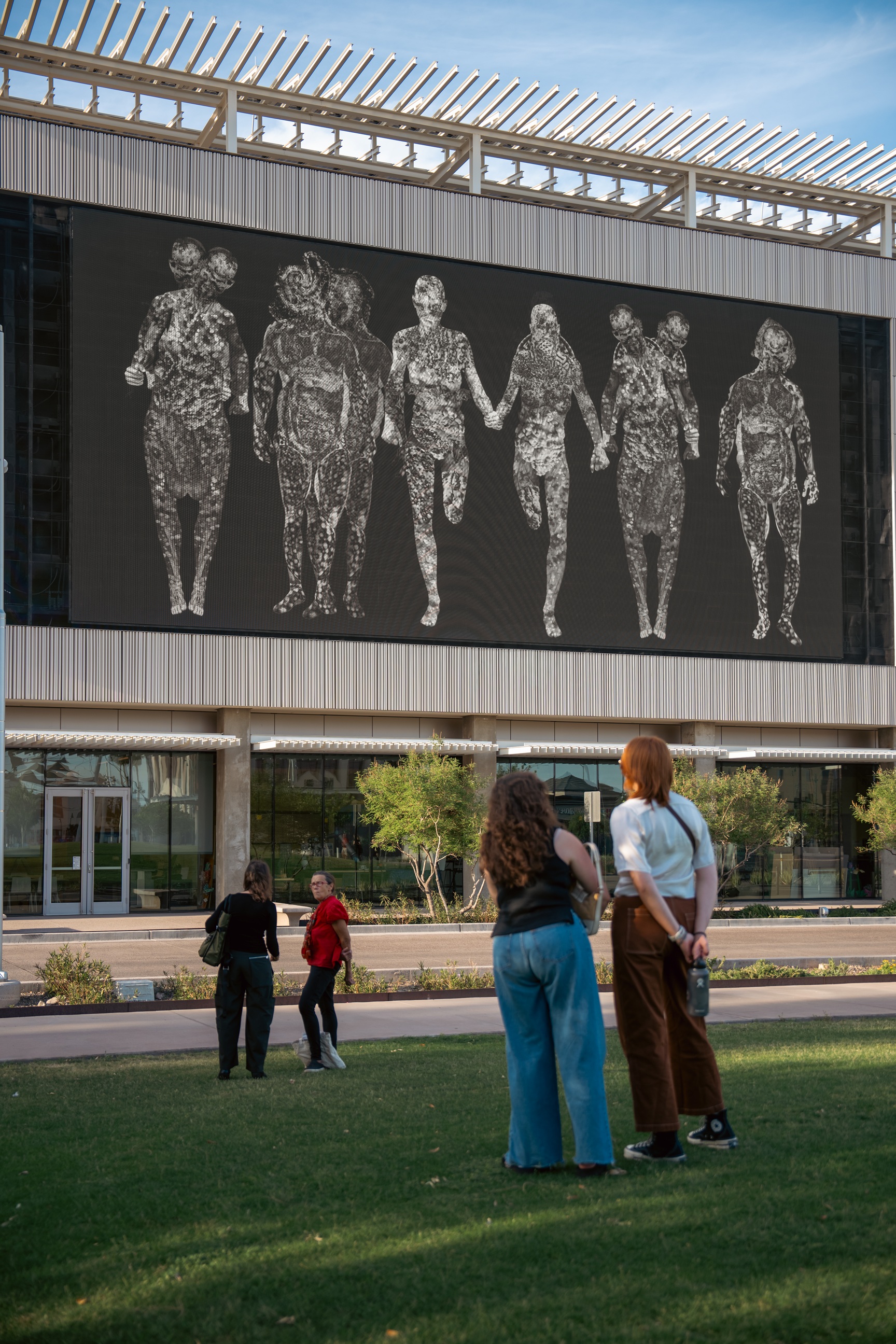
Four abstracted figures. They have no visible faces, and their bodies are made up of varied high-contrast textures in a stark white.
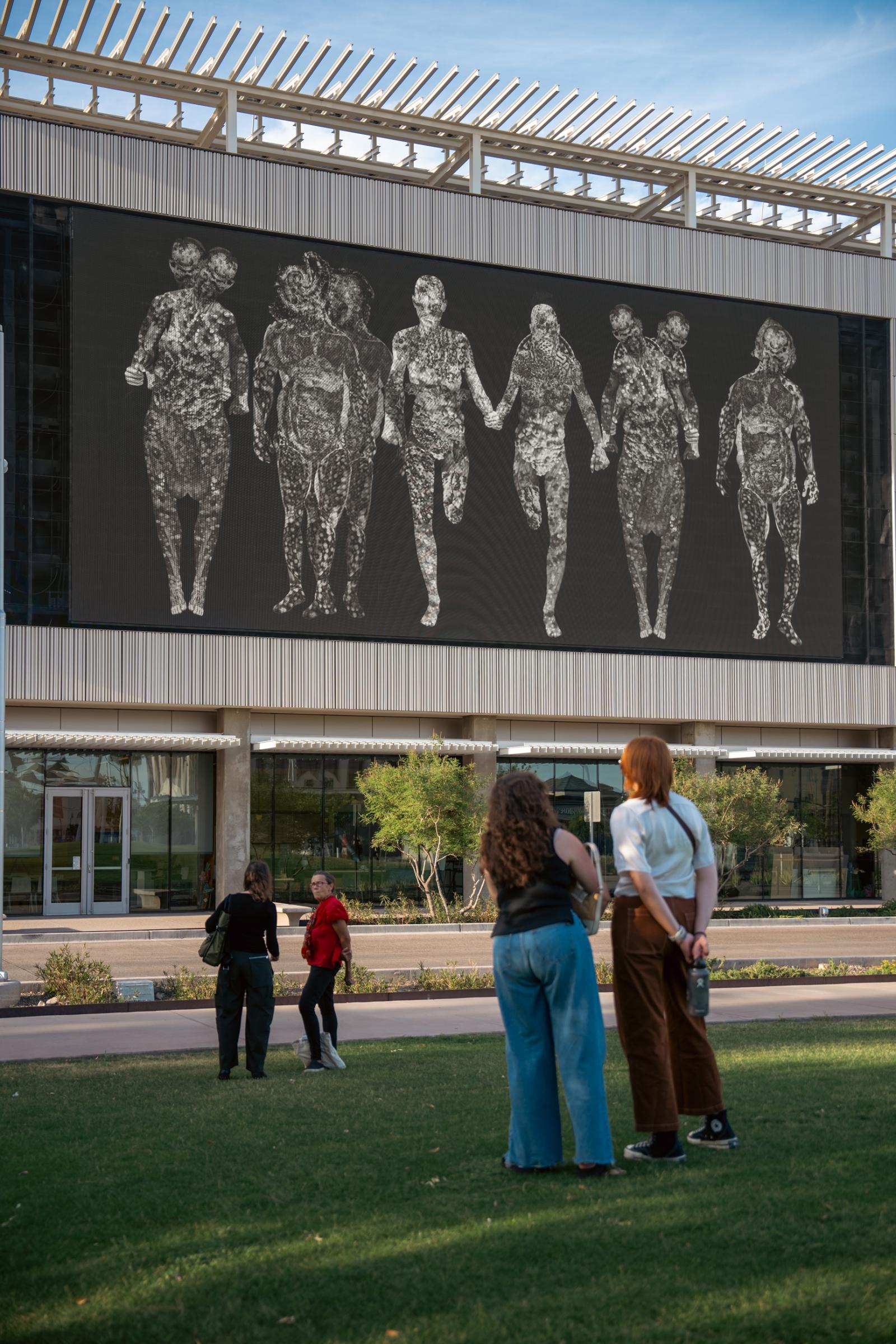
CYBOTAGE
Zeina Barakeh grew up in Beirut. She knows what it means to live inside the consequences of military technology. That knowledge is the substrate of CYBOTAGE.
A Leonardo-ASU Planetary Health Seed Grant gave Barakeh the early support to develop a an inquiry into the ethical implications of military brain-computer interfaces—technologies that blur the boundaries between human cognition, machine intelligence, and warfare. The question at its center: when the body itself becomes a networked system, what happens to agency?
The resulting work is a three-channel site-specific video installation of floor-to-ceiling animated figures—digital colossi inspired by the guardian statues of Ancient Egypt's Abu Simbel. Their bodies are not built from circuits or code, but from seashells, corals, jellyfish, and fish parts. The choice is deliberate: military enhancements are ultimately inspired by nature. These figures shift between threat and protection, between guardian and weapon, between human and machine.
"The CYBOTAGE figures embody an ambiguity—oscillating between threat and protection—that speaks to their role as guardians of cyberspace," Barakeh says, "and, more deeply, as protectors of our humanity."
In 2025, the work moved from speculative inquiry into major public exhibition contexts, including a solo show at Catharine Clark Gallery in San Francisco and ASU's MIX Center. Recognition followed, including the 2024 San Francisco Bay Area Artadia Award and a published review in Leonardo journal.
But the project's significance extends beyond exhibition. As both an artist and a scholar of security studies, Barakeh occupies a rare position at the intersection of artistic practice, neuroscience, military technology, and ethics. CYBOTAGE demonstrates how hybrid practitioners can bridge domains that rarely engage one another, creating space for critical inquiry into emerging technologies before their consequences become fully visible. The project has also generated dialogue beyond the gallery through workshops with veterans and conversations with experts, bringing diverse perspectives to the questions at the heart of the work. What began as a seed grant became a form of public scholarship at the intersection of art, neuroscience, and global security.
Theme 2
Transdisciplinary Innovation
Translating transdisciplinary practice into evidence, models, and institutional tools
Innovation rarely emerges from isolated insight alone. It takes shape through many conditions: long runways, early visibility, rigorous inquiry, institutional openness, and the productive friction that occurs when different disciplines, methods, languages, and forms of evidence meet. Leonardo creates contexts where these conditions can come together, helping early ideas gain clarity, credibility, and traction before their value is fully legible.
A cube visualization in 3/4 view, segmented into 8 smaller cubes. The back corner is labeled Quest for Knowledge, the bottom left corner is labelled Contemplation of Sentiment, and the bottom right corner is labelled Consideration of Use. The smaller cube closed to us on top is labelled DaVinci's Cube: use-inspired, sentiment-driven, knowledge-enabled innovation.
Da Vinci’s Cube
Most innovation systems assume that breakthrough ideas emerge primarily from research laboratories, engineering teams, and technology startups. Artists are often invited into the process later—to communicate, visualize, or humanize innovations developed elsewhere.
Leonardo serves as a core research partner in a National Endowment for the Arts Research Lab led by Virginia Tech's Institute for Creativity, Arts, and Technology. Together, the research team is investigating a different proposition: that creative practitioners contribute a distinct and essential dimension to innovation itself.
The project's central contribution—da Vinci's Cube—is a framework that expands traditional innovation models by introducing contemplation of sentiment as a vital third dimension. The framework suggests that artists do not simply illustrate innovation; they help generate it by exploring human meaning, values, emotion, and experience in ways that other disciplines often overlook.
Over two years, the research team conducted discovery interviews with industry professionals, developed three arts-integrated case studies, presented findings at six conferences, and published a book chapter, The da Vinci's Cube: A New Model for Understanding Innovation at the Edges of Art and Science. The framework was introduced to engineering educators, industry innovators, government representatives, and emerging researchers simultaneously—a deliberate strategy to seed the model across the systems that shape how innovation is defined and rewarded.
The framework is now moving beyond research into education, industry, and policy conversations. A second phase of funding will expand the evidence base through additional case studies and new analytical tools designed to better understand how innovation emerges across disciplines. The next challenge is not demonstrating that artists contribute to innovation—it is helping institutions recognize, support, and systematically integrate that contribution.
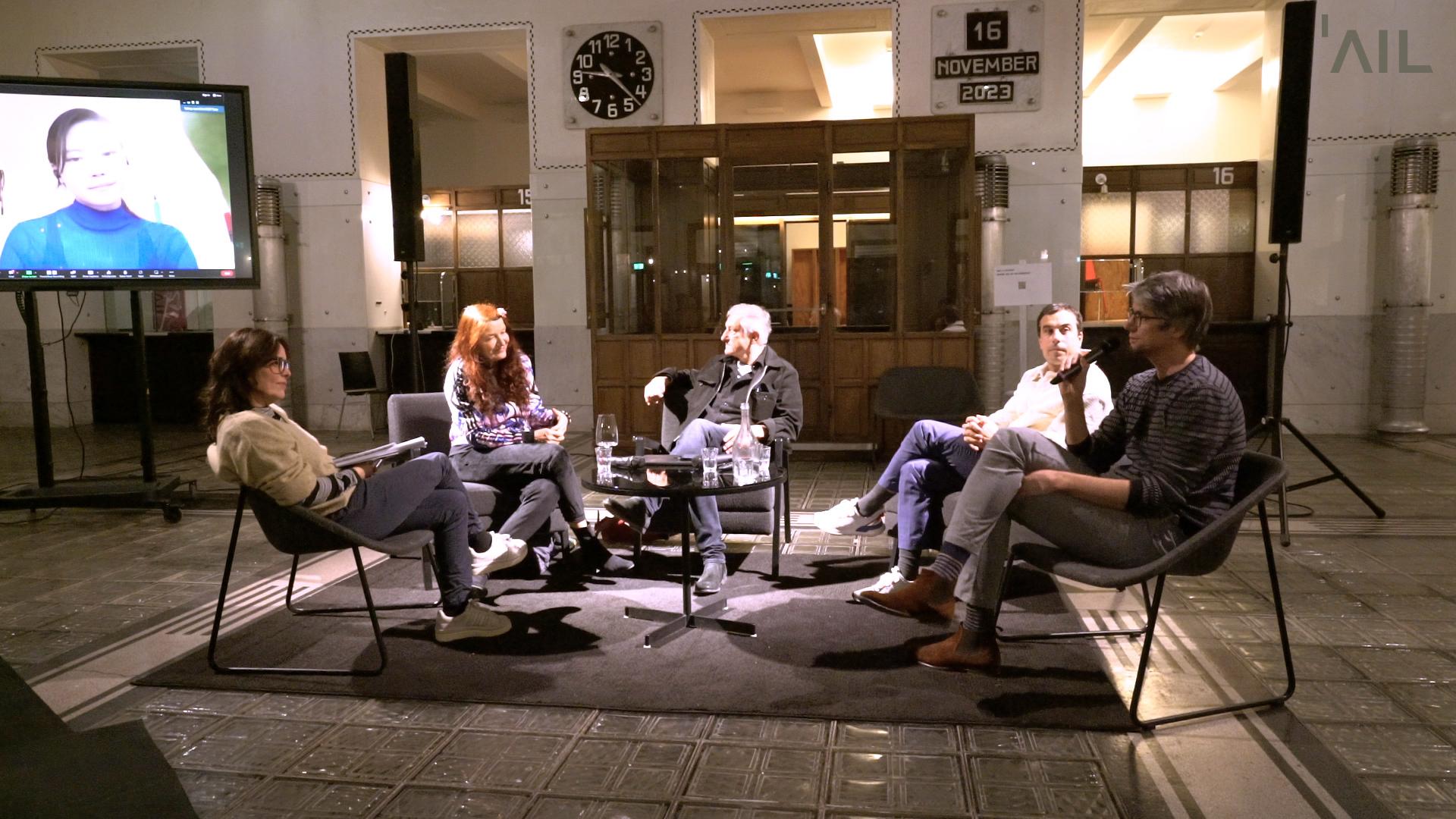
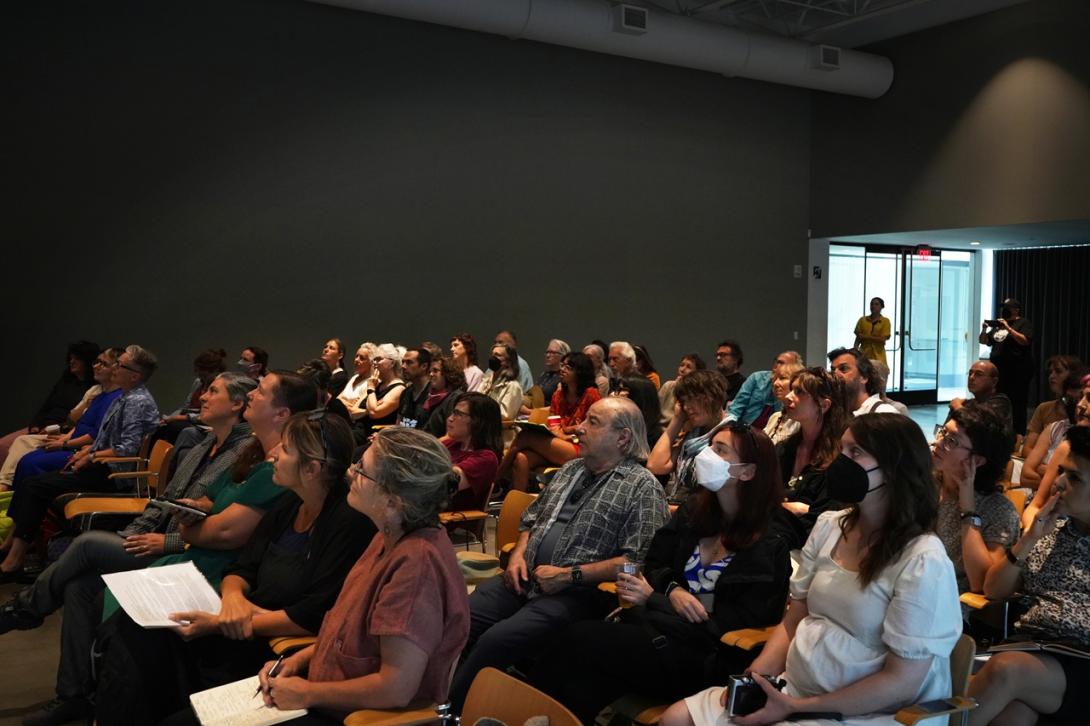
LASER (Leonardo Art Science Evening Rendezvous) Talks
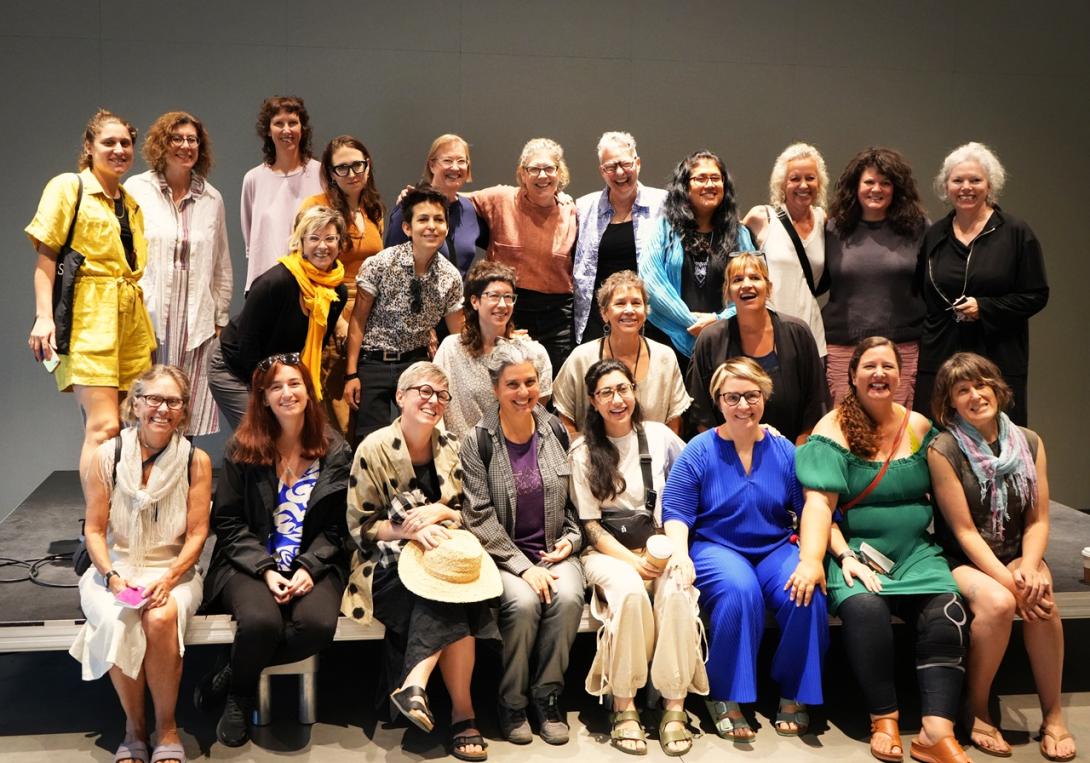
In 2025, the LASER network hosted 52 salons across more than 60 cities worldwide, adding Bergen, Xiamen, and Chengdu—each rooted in a different disciplinary home.
In Bergen, digital artists and ecological researchers Alinta Krauth and Jason Nelson bring LASER into the intersection of electronic literature, more-than-human inquiry, and environmental art. Krauth, a former Leonardo-ASU Imagination Fellow, is among a growing cohort of Leonardo alumni who have become network stewards—carrying the organization's convening model into new institutional contexts.
In Chengdu, the network found a home inside the Big Data Research Center at the University of Electronic Science and Technology of China—a signal that LASER's informal, cross-disciplinary model is resonating within engineering institutions, not just arts ones. In Xiamen, the Institute of Creativity and Innovation at Xiamen University anchors a third new node, extending Leonardo's presence along China's southeastern coast.
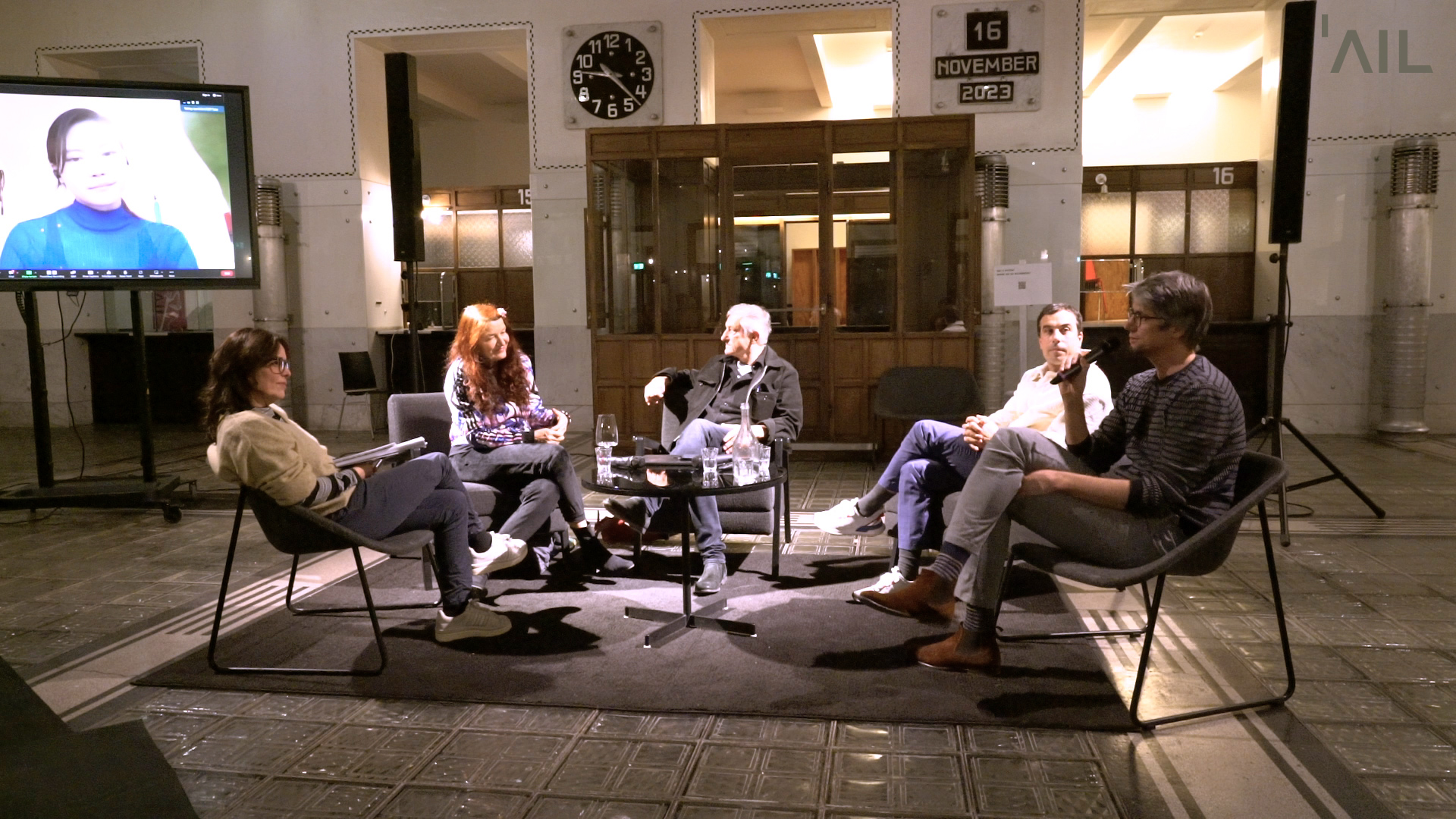
Together, these additions reflect what LASER has always been: a distributed listening network for early signals across emerging fields and transdisciplinary practice. Its low-barrier gatherings allow questions to surface early, relationships to form across disciplines, and local communities of practice to connect with Leonardo’s broader global ecosystem.
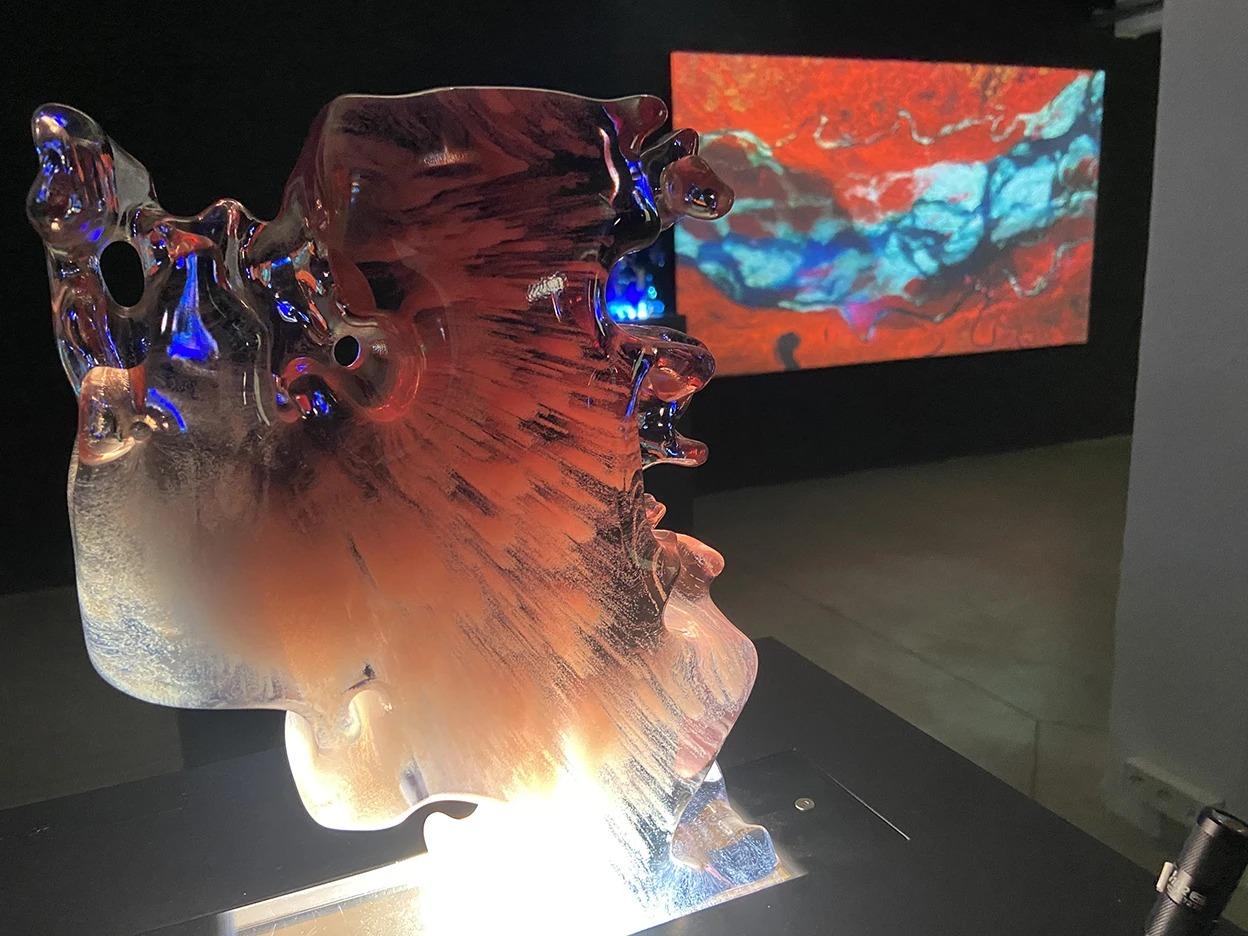
Theme 2
Theme 3
Planetary Health
Reimagining relation, land, technology, and ecological futures
Planetary health is not only an environmental question. It is a question of interdependence: how human, ecological, technological, cultural, and more-than-human systems shape one another. Leonardo’s work in this area asks how we sense those relationships, how we represent them, how we intervene in them, and how we imagine futures capable of sustaining life.
Resonant Waters
In coastal Brazil, fishers and wild dolphins have collaborated for centuries—coordinating catches through a system of mutual signals that neither species fully controls alone. It is one of the last practices of its kind in the world. Scientists and conservationists had been working to protect it for years. The missing ingredient was an artist.
A Leonardo-ASU Imagination Fellowship brought Matheus Montanari into the project—a researcher and filmmaker whose presence bridged disciplines, translated the practice across communities, and brought a resonance to the effort that extended far beyond the team on the ground.
What followed was remarkable in its speed. Within a single year, the project became a formal contribution to Brazil's Federal Institute of Historical and Artistic Heritage—one that successfully argued for the dolphins themselves to be recognized as holders of cultural heritage. In 2026, the practice became legally protected.
The registration changed the terms of development in the region. Mapped zones where the practice occurs now require government permits before any construction or intervention can proceed—creating a bureaucratic barrier against the sewage dumping and coastal development that threaten the ecosystem. The practice now has legal footing it did not have before Leonardo's investment.
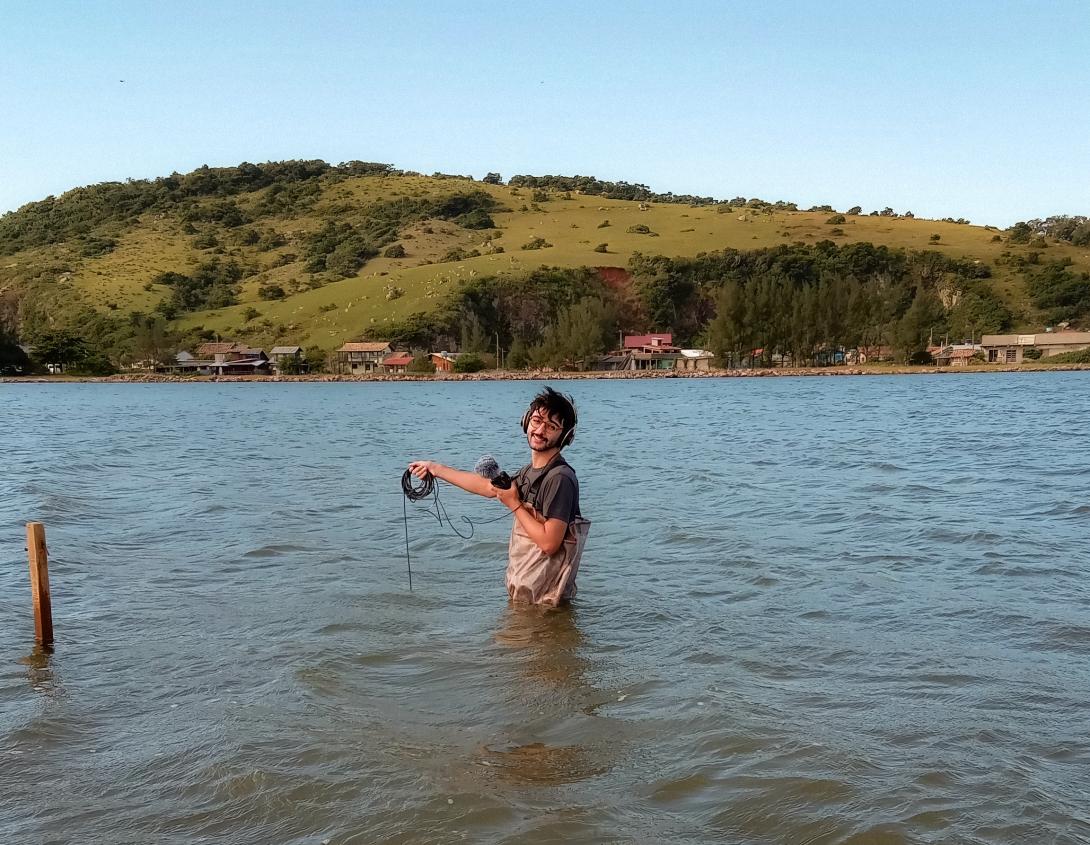
"The dolphins, the fishing practice was recognized as a cultural practice not only of the fishers but also [of] the dolphins. This was the first time that a more-than-human culture was recognized in this context, since we argued that the dolphins themselves are holders of this heritage."
— Matheus Montanari, Imagination Fellow
The work continues. Montanari has teamed up with CANOA at the Federal University of Santa Catarina to help develop a documentary film that is bringing the story back to the village and to the broader public—ensuring the community that holds this knowledge can also hold its telling.
Cosmovisión
Some moments must be experienced in real-time. Cosmovisión Torneo de la Bahía was one of them.
Developed by Indigenous collective Postcommodity—Cristóbal Martinez (Genizaro) and Kade L. Twist (Cherokee), whose work has been exhibited at documenta14, the Whitney Biennial, and the Carnegie International—Cosmovisión is both a community platform and a ceremony. Its technical architecture combines audio and visual engines with bespoke controllers to scaffold an experience of sonic ritual grounded in Indigenous principles of reciprocity, diplomacy, and deep listening.
Four years in development, it arrived at its world premiere at SFMOMA in March 2025 through a Hewlett 50 Arts Commission in partnership with Leonardo/ISAST.
Together with SFMOMA and Postcommodity, Leonardo organized a series of community workshops that recruited performers from Bay Area arts ecosystems. Each performer contributed a sound that expressed their personal relationship to land. Those sounds became the material of the ceremony they performed together.
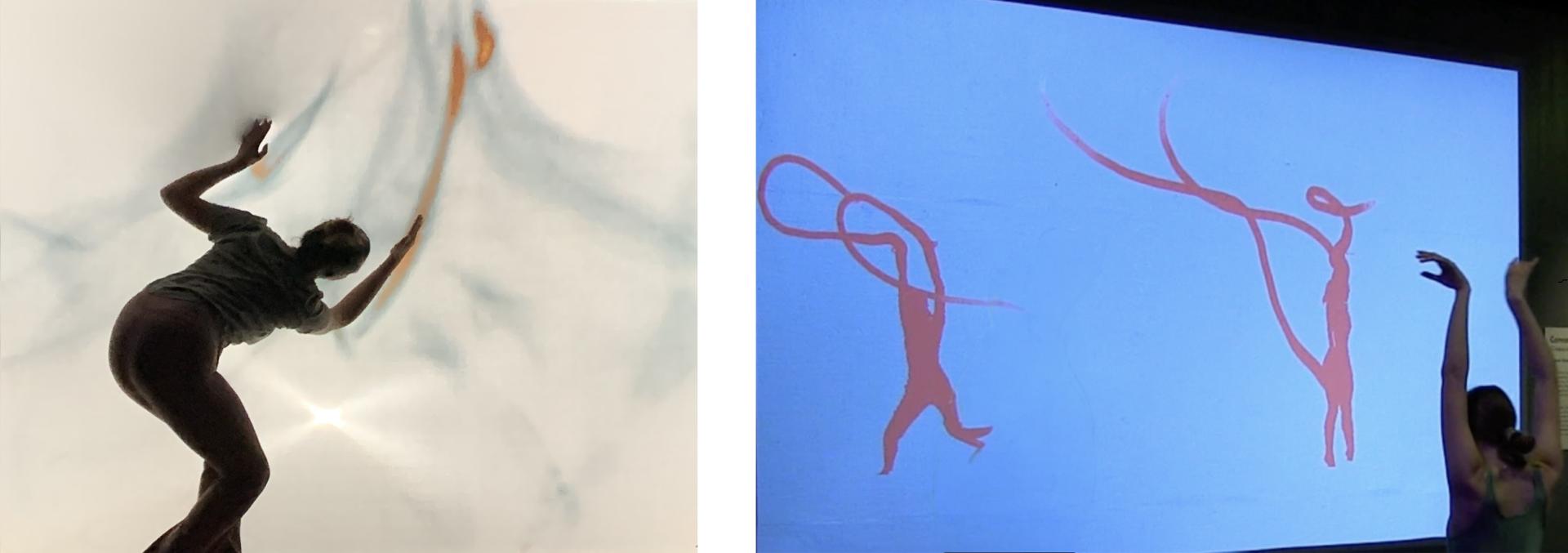
In performance, field recordings transformed through real-time collaboration became experimental music. Line drawings representing shared stories of the landscape became graphic musical scores projected on walls and floor—dissolving with discordance, returning to focus with sonority. The image they collectively created could only exist in that place, at that time, with those people.
Across two days, 560 participants experienced a form of knowledge that Western institutions rarely make room for: Meaning is not produced by individuals, but emerges through relation. What was offered was a different way of understanding how communities, institutions, and relationships might be organized—one grounded not in individual expression, but in mutual responsibility and interdependence.
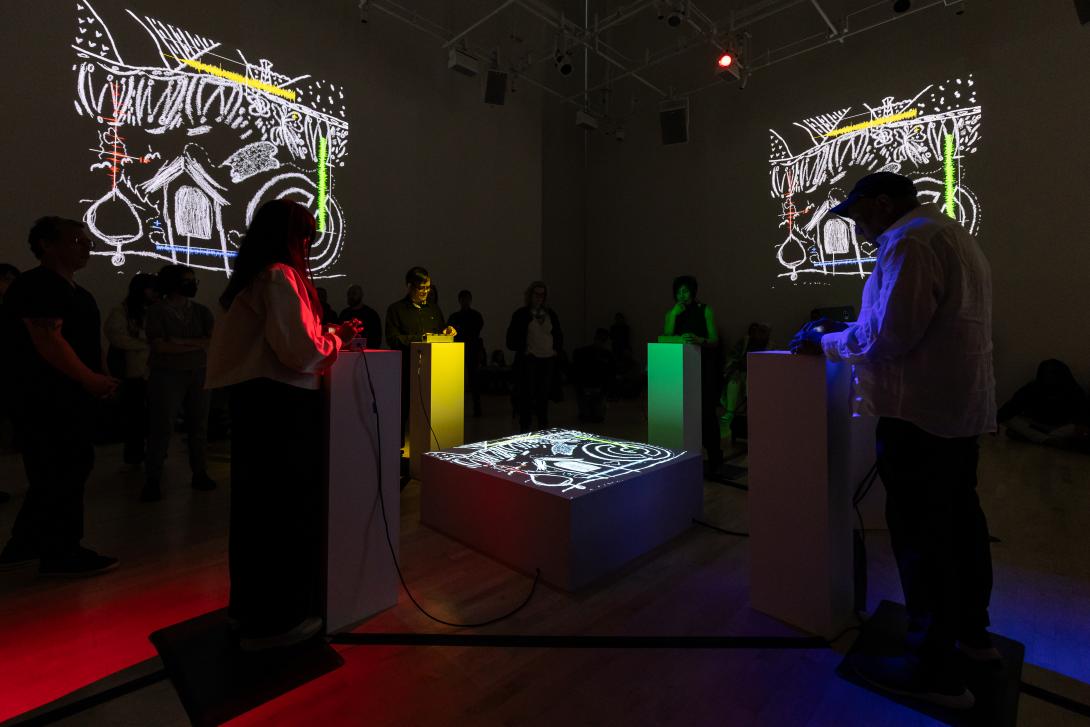
"We are using land as a mediator of relationships, bringing people into communion and into a symbolic world that can temper divisive emotional responses."
— Kade L. Twist, Postcommodity
Theme 3
Scale and Reach
Leonardo’s global footprint expanded in 2025 across publishing, digital engagement, and convening. These metrics show a community that is both broadening and deepening: reading, submitting, gathering, searching, publishing, and connecting through Leonardo’s platforms.
Publishing growth
The editorial pipeline accelerated in 2025, reflecting both an expanding submission pool and increased selectivity.
Journal Submissions
2022
2025
Journal submissions increased by 275% between 2022 and 2025.
Acceptance rate
mid-30% range
~20%
Acceptance rates moved from the mid-30% range toward approximately 20%.
509
Journal submissions
65,441
MIT Press article views
5
Continents represented by contributors
Graduate abstracts
A global validation engine for emerging researchers
5
Highest ranked
11
Highly ranked
63
Submitted
Top-ranked research areas integrated advanced computation and systemic critique, including:
AI-predicted attention maps in cross-cultural designFeminist biofeedback music frameworksComputer vision paint translationCounter-archives confronting colonial legacies
Peer-reviewed entry point
The database validates emerging advanced-degree researchers and gives them a publishing pathway.
Review panel spanning 12 countries
Including Brazil, Colombia, Lebanon, Hong Kong, and the United States.
Next-generation research pipeline
Top-tier authors receive direct invitations to expand their abstracts into full-length Leonardo journal articles.
Digital reach
Traffic patterns in 2025 point to an expanding community of readers, contributors, and prospective authors looking for concrete ways to publish, participate, and enter the field.
329,000+
Page views
205,000+
Sessions
185+
Visitor countries and territories
Audience trend
A shift toward stronger intentional engagement
Traffic patterns suggest that a growing share of Leonardo’s audience is reaching the organization through intentional pathways, including bookmarks, direct links, newsletters, referrals, and other non-search routes.
+137%
Direct sessions
+160%
Direct active users
+19%
Manuscript Preparation page views
+35%
Journals page views
Gateway to publishing
The website functioned as a gateway into Leonardo’s broader publishing and participation ecosystem. High-intent traffic increased across key landing pages.
Expanding community
These patterns point to an expanding community of readers, contributors, and prospective authors looking for concrete ways to publish, participate, and enter the field.
Network and Convening
Laser Global Network
A distributed map of emergence
Fostering connections
Visitors are not only looking for content; they are using Leonardo to locate people, practices, and peers within a broader transdisciplinary field.
Expanding regional reach
New LASER hosts in Bergen, Xiamen, and Chengdu extended the network into regions it had not previously reached.
Together, these metrics show that Leonardo’s infrastructure is active and expanding across multiple scales: scholarly, digital, social, institutional, and global.

Sustainable by Design
Leonardo's global reach is backed by a deliberately diversified financial model. Nearly half of operating revenue comes from publishing and academic earned income—providing a uniquely stable foundation that most arts organizations lack. The remainder is drawn from philanthropic grants and institutional partnerships. The majority of expenditures flow directly into programmatic and publication work: the journal, the labs, residencies, fellowships, and scholarly exchange that our five pathways describe.
Funders and Partners
Public and Philanthropic Funders
Investing in risk, experimentation, and long-term field-building
Our philanthropic partners provide the catalytic capital that enables radical, early-stage ideas to mature into recognized field contributions. In 2025, their targeted investments directly resourced our core pathways:

National Endowment for the Arts: Supporting the development of transdisciplinary knowledge and systemic breakthroughs.
Ford Foundation: Investing in the practitioners, leaders, and durable systems required to scale fields.
The William and Flora Hewlett Foundation: Funding rigorous research contexts and high-risk creative experimentation.

California Arts Council: Resourcing localized creative trials and cultivating regional cohorts of practitioners.

Ability Central: Anchoring foundational breakthroughs in access and supporting disability-led expertise.
“Ability Central is proud to support Leonardo/ISAST’s CripTech Incubator because it puts disabled creators at the center of innovation. The Incubator is building a global platform for disabled artists, designers, and technologists to shape the future of creative technology.”
— Griffen Stapp, Executive Director, Ability Central
Global Institutional Anchors
Embedding transdisciplinary practice in durable systems.
Our primary institutional anchors provide the long-term, structural foundations necessary to scale hybrid practice across global education, publishing, and public research:

Arizona State University: Leonardo’s anchor for systemic university capacity building, arts-integrated public research infrastructure, and cross-disciplinary seed funding.
Tsinghua University: Leonardo’s anchor for international exchange, cross-cultural scholarship, and bilingual global publishing across Asia.

MIT Press: Leonardo’s anchor for peer-reviewed publication, global academic distribution, and scholarly archiving.
Co-Delivery and Programmatic Network
Producing, hosting, and extending Leonardo’s core initiatives
These key partners collaborate with Leonardo to co-design and execute our active labs, residencies, and field research initiatives worldwide:



Institutional Members and Affiliate Network
Our membership network forms a global infrastructure that keeps transdisciplinary practice resilient, connected, and visible across continents:



What Emergence Requires Next
As Leonardo approaches its 60th anniversary, the work ahead is not only to scale what exists. It is to deepen the conditions that allow overlooked questions and emerging practitioners to take root across new geographies and institutions.
That means expanding a distributed global network; centering knowledge from practitioners historically excluded from dominant systems; strengthening the publishing and peer-review infrastructure that lets ideas endure; and architecting the partnerships and platforms that will carry this work through the next sixty years.
Our Invitation
The future will not emerge from silos.
It will emerge from artists collaborating with scientists; technologists working directly with communities; disabled creators challenging and restructuring the foundational biases embedded in automated and algorithmic technologies; Indigenous methodologies transforming legacy frameworks; researchers building new evidence models; and visionary partners willing to support what is not yet fully recognized.
Over the years, Leonardo has helped make these futures possible by giving emerging ideas, practitioners, and fields the recognition, context, community, and institutional pathways they need to take root.
As we approach our 60th anniversary, we invite partners across sectors — funders, universities, museums, publishers, research centers, civic institutions, companies, artists, scientists, technologists, and communities around the world — to help shape what comes next.
There are three ways to begin.
Invest in a pathway. Fund a lab, a fellowship, or a seed-grant cycle—the catalytic capital that turns early signals into fields, frameworks, and protections.
Anchor the next sixty years. Become a founding partner of Leonardo’s 60th anniversary initiatives, helping shape the programs, publications, and convenings that will carry this work into its next era.
Bring Leonardo into your institution. Host a LASER, join the affiliate network, co-publish a special issue, or co-design a lab with our team.
Join us.
Get in touch: info@leonardo.info

Copyright © 2026 | Privacy Policy
Leonardo® is a registered trademark of ISAST.